Crimson River Games LLC
Scripted vs Procedurally Generated Adventures
Ahhhh, the age-old debate.. a scripted but decision-limited adventure or a procedurally generated, fully sandbox but sometimes senseless adventure? Those purists from back in the day might harken back to the murder hobo days of their youth. Where it did not matter that the monsters in the next room made no sense (shark in a dungeon) and tended to ignore the death cries of the ones you murdered in this room. The days of wandering monster tables that made things feel more like playing the first Diablo or Doom, rather than the story of a character’s life.
This is offset by a view that everything should mean something, and the goal is to get to the end of the adventure and achieve something meaningful. A process where the party strives to make “the right choices” and where murderhobo-ing is both discouraged and counterproductive. A process where merely choosing whether to walk down a hallway might actually be out of your hands, and where you are along for the ride rather than driving the bus.
Which is better? Honestly, neither, and both.
That is to say that both have their place in role-playing and a time in every campaign. The game master is responsible for learning the wants, likes, and dislikes of his gaming group and adjusting accordingly. Those who want to go a-murdurhobo-ing in a reasonably scripted adventure should have the opportunity to do so. Those who seek meaning in a sandbox should be given the opportunity to have limited scripting between the mindless looting and hoarding.
Accomplishing this is actually fairly easy, you just have to be flexible in your approach to game mastering and in adventure creation. For adventures that are sandbox in nature, a limited bullet point script may be developed where each movement forward or increase in wealth results in the party moving the story forward one point. This is as easy as their landing on the shore of a new place and establishing themselves, with each level of success moving them toward a showdown with a local lord, or evil wizard, all along the way, the bullet points give them a clue or rumor of what is to come.
Conversely, if you have a scripted story with a start and end point, use random event tables to cover you when the party chooses to move off the script. Adventure designers should add tables for each city, environment, and set of conditions the party will be operating in, so that it will appear that it is part of the story and not a one-off. This can even be used to move the story forward by adding to the table of “random events” a table of rumors or outcomes that will move the party forward in the chain of events or give them some special insights that would not have been granted otherwise.
I personally try to create scripted adventures where there are plenty of opportunities to explore and do your own thing, but with the addition of timelines where things occur to move the story forward, no matter what happens. This means that I move EVENTS, not the PARTY. There is a big difference here. Games where the PARTY is moved result in railroading and a lack of agency. This is basically a movie with dice, where the outcome is already set, with the only variable being who will live and die. Moving EVENTS means that the party can do whatever they want while being impacted by developing events around them. Should they choose not to take part in the scheme of the antagonist, that is fine until that entity chooses to take part in their lives, or ignore them entirely, and the adventure will transition to another.
I find this to be the most akin to real life. I have had groups in play testing that have opted to be the worst kind of murder-hobo and totally ignore events as they unfold toward the culmination of something really bad. They fled that event and found themselves pariahs and outcasts for the next few adventures until they undid what they failed to stop on the first occasion. Many died in the process, which is a mirror of real life. If you ignore the tiger that just took up residence in your kitchen, don’t be surprised when it eats you.
One final note on Murder Hobo-ing vs Railroading: they both do have a place in games, just not the place of honor. If you have an adventure that is based on killing and looting, cool, change it up next time, or make this set of actions result in the next adventure, which is scripted. If you just ended a story-driven adventure where the events forced the party down a path, cool, next time do a sandbox with bullet points so they can help write that story.
It’s easy to know when you have strayed too far one way or another. If you read your introduction and find that the players are snoring, on social media, or have the 1000 yard stare, you have scripted far too much. Conversely, if your adventure begins with “you are in a tavern, what do you want to do?” you might be lacking a little in your narrative.
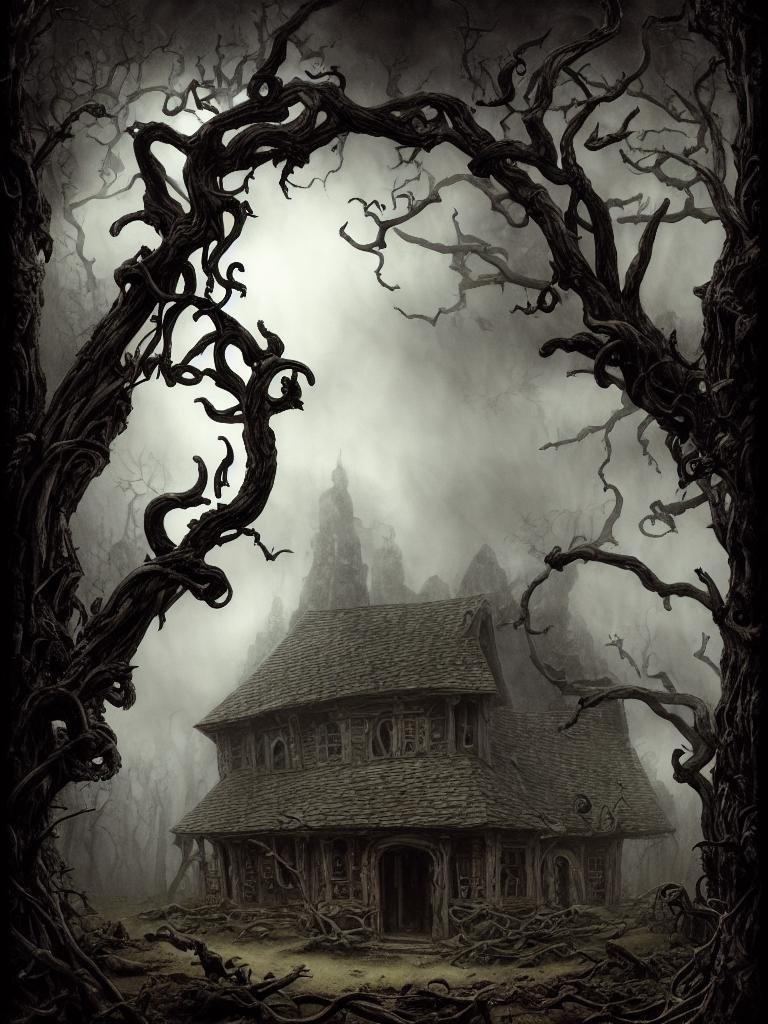
Concept art for the adventure “Tom’s Bones,” which, incidentally, begins with “You are in a bar, what do you want to do?” (not really, but sort of)