Crimson River Games LLC
High and Low: The Magic Problem.
Magic is a huge problem in fantasy horror writing and adventures. It’s as much of a problem as the “murder hobo” lifestyle that the RPG industry has had since its early conception, i.e. “why are we doing this if we are the good guys?” J.R.R Tolkien, for all of his use of wizards and elves, used it sparingly, and I would opine that this added to his world in its absence. If his characters could have just “magicked” their way out of things, then his stories would not have been stories at all.
This goes double for any world where you want horror to be a factor. In a world where raising your long-deceased butler from the dead to get your housework done is a thing, the dead are no longer out of the ordinary, and magic is mundane. In an adventure where the party discusses the difference between the various types of monsters and what magical gewgaws and spells are needed to overcome them, like a mechanic discussing the finer points of the socket wrench, detracts from the “unknown” that must be present for horror to work. In essence, if everything is possible, nothing is surprising.
The first step in dealing with this issue is to take a long, hard look at the gaming system involved. If it is an inherently “magical” system, the Game Master (GM) has their job cut out for them in limiting its negative impact on horror gameplay. In many cases, this is accomplished with “limited” magic items that fail or wear out, and most of the Non Player Characters (NPC’s) never having seen magic and having a very negative reaction to it. In worlds where faeries and dragon princes are your neighbors, horror credibility is almost impossible or is at best achieved by creating horrific villains or circumstances that can’t be “magicked” away. Of course, limiting the power of the magic-using members of the party puts them at an even greater disadvantage than normal, and is almost certainly deadly in most systems; thus, a balance must be sought.
The second step is really focusing on creating problems that magic alone won’t solve. For example, creating villains who aren’t best defeated by killing them, or you have no access to, places where the environment impacts parties’ abilities equally, injuries that don’t heal, or where healing is less effective, or where there is a lasting effect that is cumulative, and no “textbook” solution to in the grimoire you have with you. Balance here, too, is the key, as you don’t want to just neuter the magic user.
The final step is weaning the party off of everyday magic and monsters. Make the majority of interactions with normal people and otherworldly stuff rare. A great example of this type of scenario was the Grim television series created by Stephen Carpenter, Jim Kouf, and David Greenwalt, and produced by Universal Television. While not technically completely horror, the series did a great job of mixing the magical world into the mundane. It made magic profuse but rare to most people, and monsters present but unknown to most. The best example of this was the La Llorona episode (season 2, episode 9), which mixes enough supernatural with reality to make it scary, and then it ends with no answers.
Which brings me to the final, and most relevant way to offset magic’s effect on horror: take away the known. Don’t name a spell, just describe its outcome and what changed this time. Don’t name the monster, describe it, and let them try and figure it out. Give no answers, no explanations, fill in no blanks at the end of the adventure; leave everything to their imaginations. This is harder said than done, and most GMs will have a hard time with this. We are social creatures, and we are usually close to those we game with. We tend to answer questions, which takes away the mystery. Avoid this at all costs, and you can offset the mundanity of magic, the classification of undead butlers, and bring uncertainty back to your game.
I will leave you with the best example of this by J.R.R Tolkien himself. He did not describe the mechanism, the why, or even really the who. What he did describe was a place called the Dead Marshes and, in that passage, encompassed every concept that I have noted above.
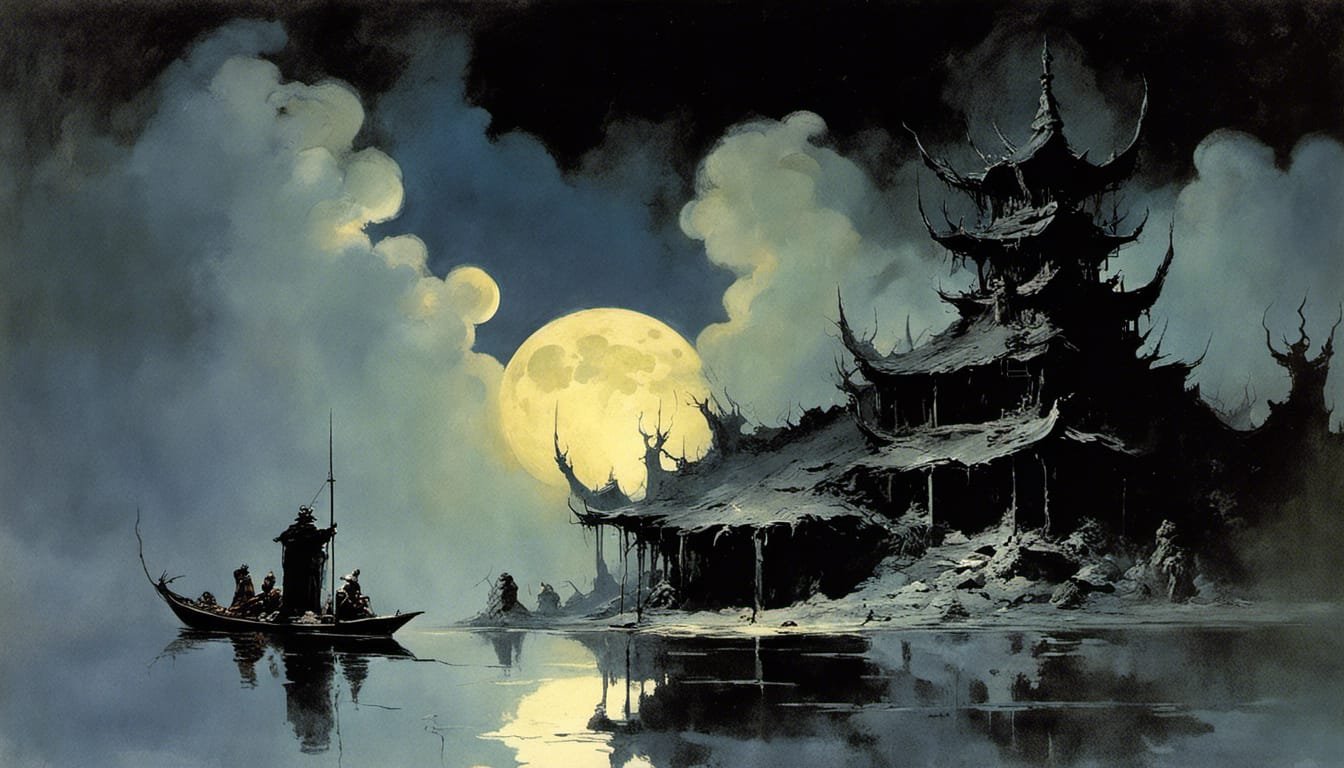
Devoid of easy magical solutions or an encyclopedia of monsters, the world is a little scarier.