Crimson River Games LLC
Research and Adventure Writing
I have been writing and running adventures in various forms and systems since 1983. Admittedly, my initial adventures at the age of 7 or so were severely lacking in plot, background, originality, depth, and ink in many cases; what are you going to do? As we all do, I went through various phases of development until, in my late 30s, I found myself spending 4-10 hours prepping for a game session that would, for all intents and purposes, last for 2-3 hours with 1-1.5 hours actual game time. This is about average, and is not out of the ordinary for a Game Master who wants the story to flow properly and to ensure that the suspended reality that is role playing is not interrupted by someone asking the name of an insignificant non-player character (filler) and me stuttering and making shit up; proving that they can now ignore the poor fellow as he is insignificant.
Now that I write these professionally for others, the need to cut down their prep time means a lot of studying for me. In most cases, fantasy or horror games pull from the collected zeitgeist that is mythology (real or made up) for some inspiration. This may be as basic as the description of architecture similar to that of the Han Dynasty, or as in-depth as a cultural belief of the Norse people. In most cases, players may know of these things, and in others, they will know a lot more than you can ever put in an adventure. This is why such research is always the STARTING POINT, never the actual adventure itself. A story that references a myth or a time to make it knowable, but then deviates to become new is the goal. Rewriting the tales of Fritz Lieber as an adventure can be fun, but you are running a very high chance of someone in the group knowing what comes next. Conversely, if you turn the Icelandic Sagas into an adventure, you might get Icelandic life “right,” but that your party has a Kitsune and a Hobgoblin, which won’t really be socially accepted in that strict storyline.
So then, research must be with the goal of achieving near reality, believability (within reason), and the unknown (the factor that you have changed to take it from the same old legend to something totally different). This research is not limited to fiction from the past, but includes historical retrospectives, wilderness survival books (game and real life), books on myths and legends (even if they are not from the particular culture or region you are working with), and personalities from the past or present. These are reviewed, mixed into the “feel” of the adventure, then heavily expanded upon to give little away.
Please note that research does not end with the initial work. I have been working on the Adventure Flow Map of the adventure Tears in the Snow, and have spent most of the last two days refreshing my recollection of the “feel” I wanted. This means revisiting many of the same research materials that I initially used to put the background of the adventure together, and anything new that seems to lend to a better final product. All with the goal of making a situation that appears to be known, and then making it completely unknown, or at least unpredictable.
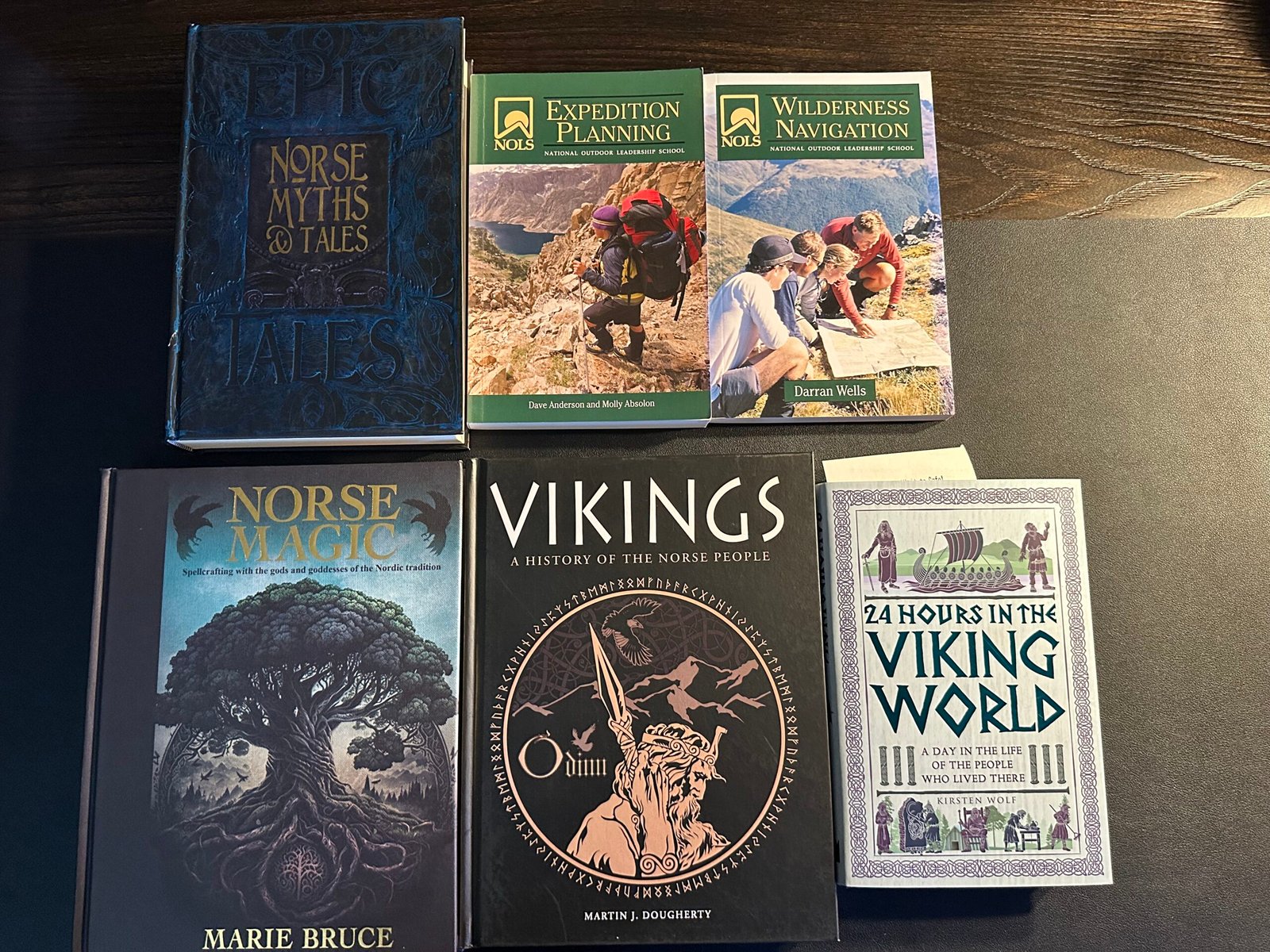
Some of the dozen or more books and sources for Tears in the Snow.